Built at Dyno
Tools for the work
behind a device.
Building a medical device involves more than a design. A team needs to understand outside evidence, document its own decisions, and keep track of what supports the product as it changes.
By Dyno · Published November 19, 2026
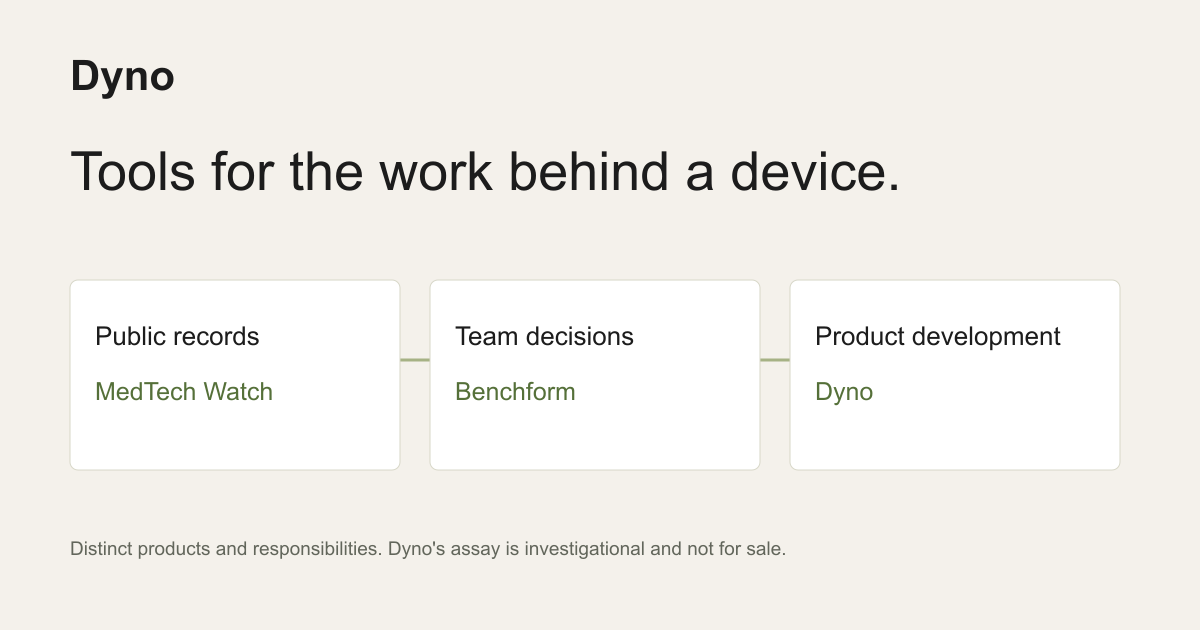
Our product work comes first.
Dyno is developing a single at-home, finger-prick testosterone assay. It is investigational, not FDA cleared or approved, and not available for sale. Performance, sample requirements, testing time, pricing, and availability have not been established.
The software tools below serve distinct parts of device research and development. Their availability does not change the status of the assay or establish that a product is safe, effective, or ready for release.
MedTech Watch: understand the public record.
MedTech Watch organizes public FDA clearance, recall, classification, and adverse-event records. Public research pages link back to original sources; optional paid monitoring follows a private watchlist and sends weekly briefs. It is competitive intelligence, not validated postmarket surveillance.
For a diagnostics team, the first useful question is often which exact classification and source company names belong in the research scope. Similar device names do not establish the same intended use or regulatory pathway.
Benchform: retain the team's decision.
Benchform is being developed for requirements, risk, traceability, quality records, and release evidence. It helps frame the next question: what did the team decide, which revision does the decision concern, and what evidence supports it?
Benchform is available for early-access evaluation. Customer qualification and approval for official quality use remain pending. A linked public record can inform an assessment; it does not approve a requirement or a release.
Three products, separate responsibilities.
These tools are built at Dyno, but their accounts and records remain separate. Visiting one does not enroll you in another or share private research and quality records. Each product should be evaluated for its stated purpose.
If you are interested in Dyno's development work as a prospective partner, provider, or investor, contact the team. You can also learn about Dyno and its founder.